




Advanced Joint Replacement Treatment at Brahm Chaitanya Hospital
If you are experiencing persistent joint pain, stiffness, swelling, or difficulty walking and performing daily activities, joint replacement surgery in Chinchwad may help improve mobility and quality of life when other treatments are no longer effective. Brahm Chaitanya Hospital provides medical evaluation and healthcare services for patients experiencing joint problems.
Call Us when you Need Help!
- ❤️ [XX]+ Cardiac Procedures
- 👨⚕️ Experienced Interventional Cardiologists
- 🚑 24x7 Emergency Cardiac Care
- 🏥 Cashless Insurance Support
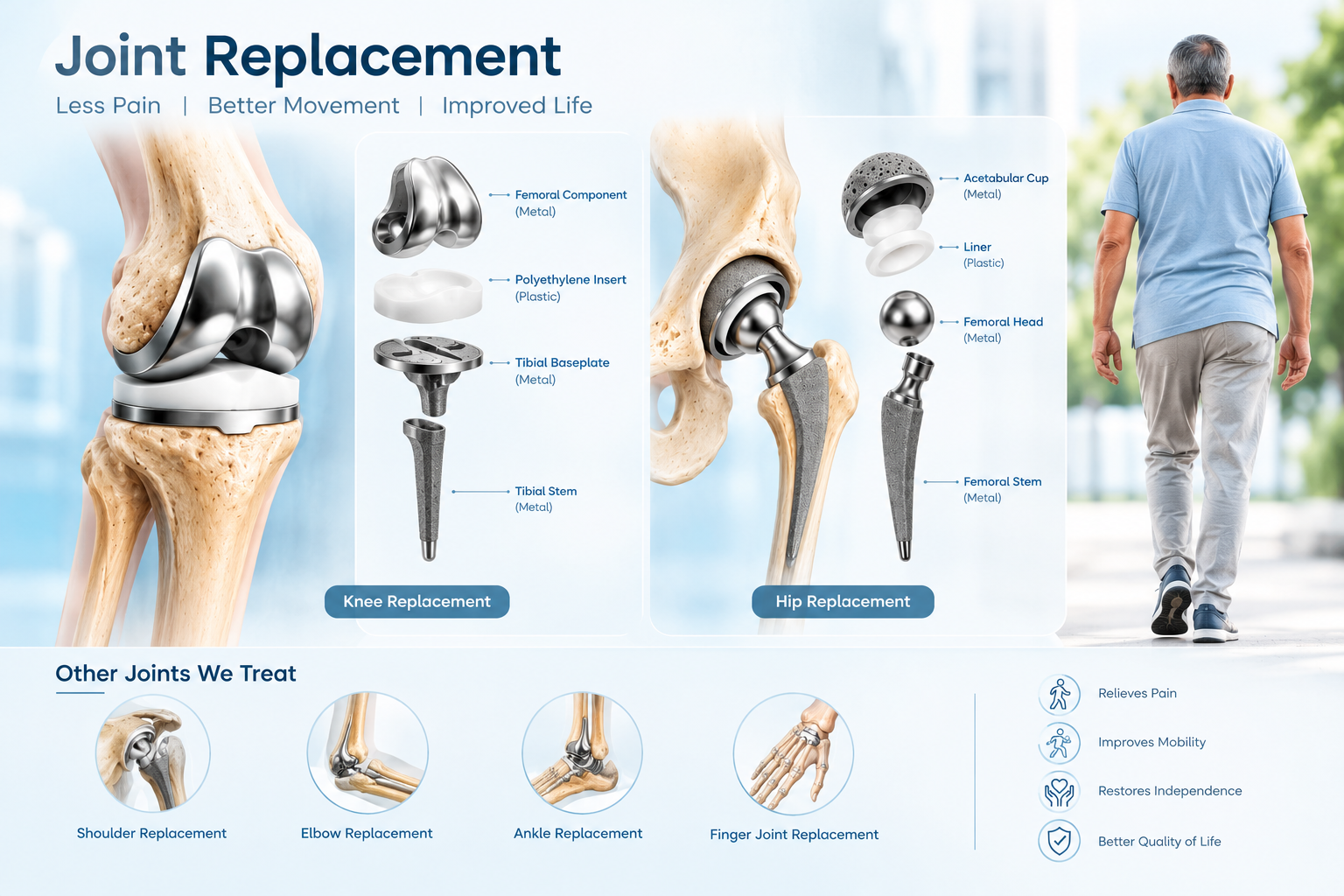
What Is Joint Replacement Surgery?
Joint replacement surgery is a procedure in which damaged parts of a joint are replaced with artificial components called prostheses. It is commonly recommended for patients experiencing severe joint pain, stiffness, and restricted movement due to arthritis, injury, or advanced joint degeneration.
Joint replacement surgery may involve the hip, knee, shoulder, or other joints, depending on the patient’s medical condition. The procedure aims to relieve pain, improve joint function, and help patients return to daily activities.
If you are searching for joint replacement surgery in Chinchwad, consulting a qualified orthopaedic specialist can help you understand your treatment options and determine whether surgery is appropriate for your condition.
How Is Joint Replacement Surgery Performed?
1. Medical Consultation
2. Pre-Surgical Evaluation
3. Joint Replacement Procedure
4. Post-Operative Monitoring
5. Physiotherapy and Rehabilitation
Why Choose Brahm Chaitanya Hospital for Joint Replacement in Chinchwad?
When considering joint replacement surgery, patients often look for a hospital that provides coordinated medical evaluation, appropriate treatment planning, and support throughout the recovery process.
Comprehensive Healthcare Services
Brahm Chaitanya Hospital focuses on providing comprehensive healthcare services with an emphasis on patient care, clinical evaluation, and treatment planning.
Orthopaedic Evaluation
A detailed orthopaedic assessment helps identify the cause of joint pain, determine the extent of joint damage, and establish whether non-surgical treatment or joint replacement may be appropriate.
Individualised Treatment Planning
Joint replacement treatment is planned according to the patient’s condition, affected joint, medical history, mobility requirements, and overall health.
Surgical and Recovery Support
Patients undergoing joint replacement require appropriate pre-operative assessment, post-operative monitoring, and rehabilitation guidance to support recovery.
Patient-Centred Approach
Clear communication, information about the procedure, and appropriate follow-up care help patients understand their treatment journey and recovery expectations.
When Is Joint Replacement Surgery Recommended?
Joint replacement surgery may be recommended when severe joint damage causes persistent pain and restricted movement despite appropriate non-surgical treatment.
Common reasons include:
- Severe osteoarthritis
- Rheumatoid arthritis affecting the joints
- Advanced cartilage damage
- Joint degeneration due to ageing
- Joint damage following certain injuries
- Persistent joint pain despite medication or physiotherapy
- Difficulty walking, standing, or climbing stairs
- Stiffness and reduced joint movement
- Pain that interferes with sleep or daily activities
- Significant joint damage that affects quality of life
A qualified orthopaedic specialist can determine whether joint replacement is appropriate based on your symptoms, examination findings, imaging results, and overall health.
What Conditions Can Joint Replacement Surgery Help Treat?
Joint replacement surgery may help manage symptoms associated with several conditions affecting the joints, including:
- Osteoarthritis
- Rheumatoid arthritis
- Advanced degenerative joint disease
- Severe cartilage damage
- Certain complex joint injuries
- Avascular necrosis affecting the hip
- Joint deformities associated with advanced arthritis
- Significant joint damage that has not responded adequately to conservative treatment
The primary goals of joint replacement are to reduce pain, improve joint function, and support better mobility. Outcomes vary depending on the patient’s condition, overall health, and rehabilitation progress.
What Types of Joint Replacement Surgery Are Available?
Joint replacement surgery can involve different joints depending on the patient's condition and treatment requirements.
Knee Replacement Surgery
Knee replacement involves replacing damaged joint surfaces in the knee with artificial components. It may be recommended for patients with advanced knee arthritis, persistent pain, and difficulty walking.
Hip Replacement Surgery
Hip replacement involves replacing damaged portions of the hip joint with artificial components. It may help relieve severe hip pain and improve mobility in patients with advanced joint damage.
Total Knee Replacement
Total knee replacement involves replacing the damaged surfaces of the knee joint with artificial implants. The procedure is commonly considered when extensive joint damage causes significant pain and functional limitations.
Total Hip Replacement
Total hip replacement involves replacing the damaged femoral head and the affected surface of the hip socket with artificial components. It may be recommended for patients with advanced arthritis or other severe hip joint conditions.
The appropriate procedure depends on the joint affected, the extent of damage, and the recommendations of your orthopaedic specialist.
Is Joint Replacement Surgery Painful?
Joint replacement surgery is performed using anaesthesia to prevent pain during the procedure. Some discomfort, swelling, and soreness may occur after surgery as the body begins to heal.
Pain management is planned according to the patient’s condition and medical needs. Your healthcare team can explain the available options and provide guidance for managing discomfort during recovery.
What Happens After Joint Replacement Surgery?
Following surgery, the medical team monitors your recovery and provides instructions regarding medication, wound care, movement, and rehabilitation.
Depending on the type of joint replacement and your medical condition, assisted standing or walking may begin under professional supervision.
Recovery generally involves:
- Pain management and post-operative monitoring
- Wound care and follow-up appointments
- Guided physiotherapy and strengthening exercises
- Gradual improvement in joint movement
- Progressive return to daily activities
- Following precautions recommended by your surgeon
Recovery time varies according to the type of surgery, age, general health, and rehabilitation progress. Follow your surgeon’s instructions and seek prompt medical attention if you experience concerning symptoms such as fever, increasing wound redness, sudden severe pain, chest pain, or breathlessness.
How Long Does Joint Replacement Surgery Take?
The duration of joint replacement surgery depends on the joint being treated, the complexity of the procedure, and the patient’s individual condition.
The operation may take approximately one to several hours. Additional time is required for pre-operative preparation, anaesthesia, post-operative monitoring, and initial recovery.
Your surgeon can provide a more personalised estimate after evaluating your condition and treatment requirements.
When Should You Consult an Orthopaedic Specialist?
You should consider medical evaluation if you experience persistent or worsening joint symptoms, particularly:
- Ongoing knee, hip, or shoulder pain
- Pain while walking or standing
- Joint stiffness after resting
- Swelling around the affected joint
- Difficulty climbing stairs
- Reduced joint movement
- Pain that disrupts sleep
- Difficulty performing everyday activities
- Persistent symptoms despite medication or physiotherapy
An orthopaedic specialist can evaluate the cause of your symptoms and recommend suitable treatment options.
Why Early Evaluation Matters
Persistent joint pain can result from arthritis, cartilage damage, injuries, or other medical conditions. Early evaluation helps identify the underlying cause and allows appropriate treatment options to be considered.
Depending on the diagnosis, treatment may include medication, physiotherapy, activity modification, weight management where appropriate, walking aids, or surgery.
When joint damage is advanced and non-surgical treatment does not provide sufficient relief, joint replacement may be considered as part of an individualised treatment plan.
What Should You Do Before Joint Replacement Surgery?
Your doctor will provide specific pre-operative instructions based on your health and treatment plan. Preparation may include:
Do not stop prescription medicines without medical advice. Discuss all medications and supplements with your healthcare team before surgery.
Brahm Chaitanya
Super Speciality Hospital
NABH ACCREDITED
CASHLESS INSURANCE
Joint Replacement in Chinchwad – Brahm Chaitanya Hospital
If you are looking for joint replacement treatment in Chinchwad, Brahm Chaitanya Hospital provides a setting for medical consultation, evaluation, and coordinated patient care.
Whether you are experiencing persistent knee pain, severe hip discomfort, advanced arthritis, or restricted joint movement, consulting an orthopaedic specialist can help you understand the most appropriate next steps.
Book a consultation to discuss your symptoms, review your treatment options, and learn whether joint replacement surgery may be suitable for your condition.

Questions you may have about the colonoscopy