



Medical advancements have transformed the way surgical procedures are performed, making treatments safer, more precise, and more comfortable for patients. One such advancement is Minimally Invasive Laparoscopic Surgery, a modern surgical technique that allows doctors to treat various medical conditions through small incisions instead of large surgical cuts.
At Brahm Chaitanya Super Speciality Hospital, we believe in providing advanced surgical care with a focus on patient safety, precision, and faster recovery. Laparoscopic surgery is one of the techniques that can help eligible patients experience less postoperative discomfort and return to their daily activities sooner.
But which conditions can actually be treated with laparoscopic surgery? Let’s understand.
What Is Minimally Invasive Laparoscopic Surgery?
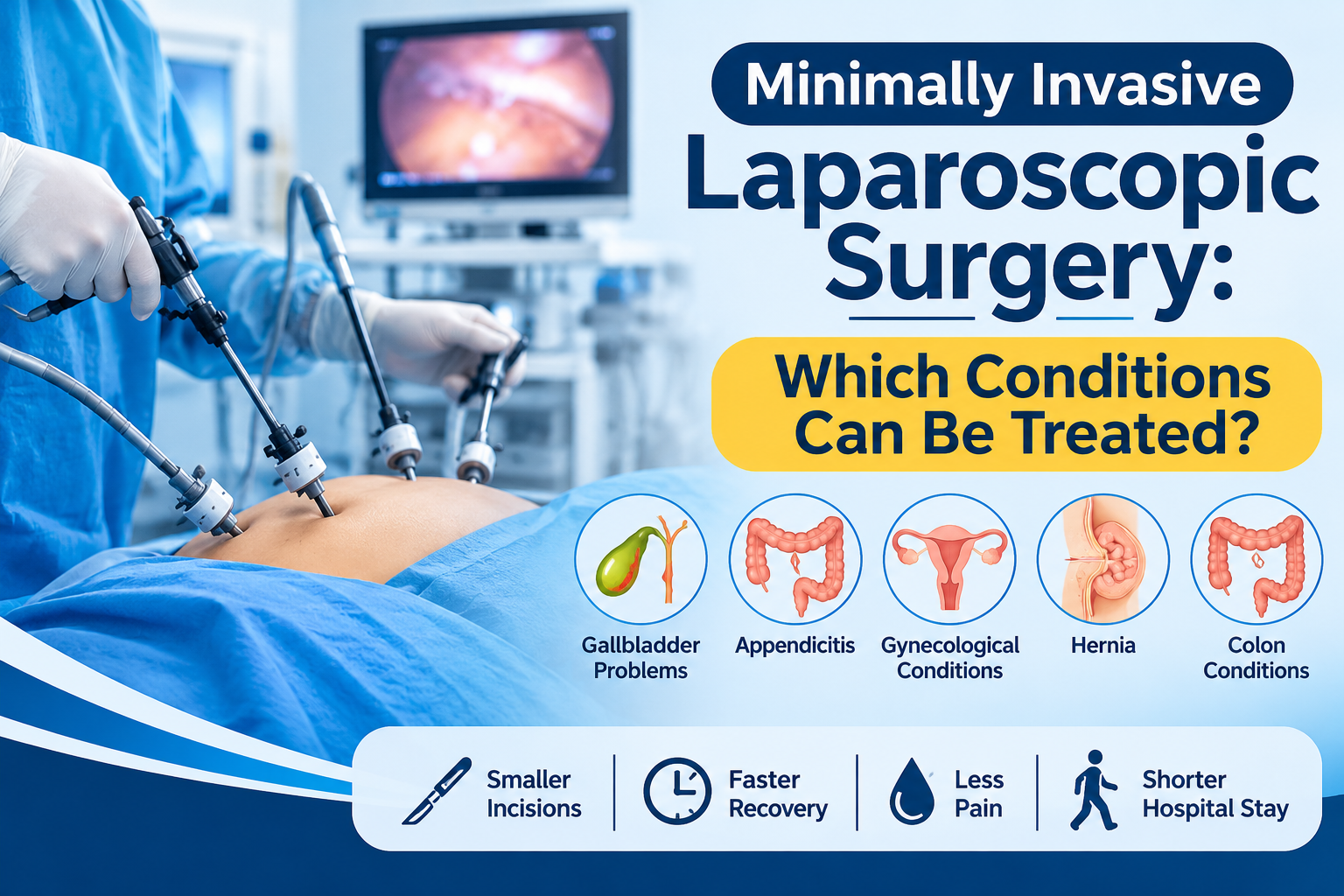
Laparoscopic surgery, also known as keyhole surgery, is a minimally invasive surgical technique in which a surgeon makes a few small incisions in the abdomen. A thin instrument called a laparoscope, equipped with a camera and light, is inserted through one of these incisions.
The camera displays clear, magnified images of the internal organs on a monitor, allowing the surgeon to perform the procedure using specialised surgical instruments.
Compared to traditional open surgery, laparoscopic procedures generally involve:
- Smaller surgical incisions.
- Less postoperative pain and discomfort.
- Reduced blood loss in many procedures.
- Lower risk of wound-related complications.
- Shorter hospital stays in many cases.
- Faster recovery and return to routine activities.
- Smaller and less noticeable scars.
The exact benefits depend on the patient’s condition, the type of surgery, and overall health.
Which Conditions Can Be Treated with Laparoscopic Surgery?
Laparoscopic surgery is used to treat several abdominal and pelvic conditions. Some of the most common include:
- Gallbladder Stones (Gallstones)
Gallstones are hardened deposits that develop inside the gallbladder. They can cause abdominal pain, nausea, vomiting, bloating, and digestive discomfort.
When gallstones cause symptoms or complications, doctors may recommend laparoscopic cholecystectomy, a procedure to remove the gallbladder.
It is one of the most commonly performed laparoscopic surgeries and generally allows patients to recover faster than with traditional open surgery.
- Appendicitis
Appendicitis occurs when the appendix becomes inflamed, often due to a blockage or infection. Common symptoms include pain in the lower right abdomen, nausea, vomiting, fever, and loss of appetite.
Laparoscopic appendectomy involves removing the inflamed appendix through small abdominal incisions.
This approach can offer reduced postoperative discomfort, smaller scars, and a shorter recovery period for suitable patients.
Important: Suspected appendicitis requires urgent medical evaluation, as delaying treatment can lead to serious complications.
A hernia develops when an internal organ or tissue pushes through a weak area in the surrounding muscle or connective tissue.
Common types include:
- Inguinal hernia (groin area).
- Umbilical hernia (near the belly button).
- Incisional hernia (at the site of a previous surgical incision).
- Hiatal hernia (upper stomach area).
Depending on the type and severity, laparoscopic hernia repair may be recommended. The surgeon uses specialised instruments to repair the weakened area, often with surgical mesh.
- Gastrointestinal Conditions
Certain gastrointestinal conditions may also be treated using laparoscopic techniques.
These include:
- Selected cases of intestinal obstruction.
- Diverticular disease.
- Certain benign intestinal conditions.
- Selected cases of colorectal cancer.
- Certain stomach-related conditions.
The choice of laparoscopic or open surgery depends on the nature of the disease, its stage, and the patient’s overall health.
- Gynaecological Conditions
Laparoscopic surgery is widely used in gynaecology to diagnose and treat various conditions affecting the uterus, ovaries, and reproductive organs.
Some common applications include:
- Ovarian cyst removal.
- Treatment of endometriosis.
- Removal of uterine fibroids in selected cases.
- Treatment of ectopic pregnancy.
- Hysterectomy (removal of the uterus) in suitable patients.
- Evaluation and treatment of certain causes of infertility.
These procedures may help reduce surgical trauma and support a smoother recovery.
- Kidney and Urological Conditions
Advanced laparoscopic techniques are also used in selected urological procedures.
Depending on the patient’s condition, these may include:
- Removal of certain kidney tumours.
- Nephrectomy (removal of a kidney or part of it).
- Treatment of certain kidney-related conditions.
- Adrenal gland removal in selected cases.
The suitability of laparoscopic surgery depends on the location, size, and complexity of the condition.
What Are the Major Benefits of Laparoscopic Surgery?
Minimally invasive surgery offers several advantages over conventional open procedures.
- Smaller Incisions: Small cuts reduce tissue damage and usually result in smaller scars.
- Less Postoperative Pain: Patients often experience less pain after surgery, which may reduce their need for pain medication.
- Faster Recovery: Many patients can resume normal activities sooner, depending on the procedure.
- Shorter Hospital Stay: Several laparoscopic procedures allow patients to return home earlier than after comparable open surgeries.
- Reduced Risk of Wound Complications: Smaller incisions may lower the risk of certain wound-related complications, although no surgical procedure is completely risk-free.
- Better Cosmetic Results: Smaller scars are often preferred by patients.
Who Is a Suitable Candidate for Laparoscopic Surgery?
Not every patient or medical condition is suitable for laparoscopic surgery. A surgeon evaluates several factors before recommending this approach, including:
- The type and severity of the medical condition.
- Previous abdominal surgeries.
- Existing medical conditions.
- Overall fitness for anaesthesia.
- The size and location of the affected organ.
- Potential surgical risks and complications.
In some situations, traditional open surgery may be a safer or more appropriate option. Occasionally, a laparoscopic procedure may need to be converted into open surgery for patient safety.
A detailed consultation and necessary diagnostic investigations help determine the most appropriate treatment approach.
What Is the Recovery Process After Laparoscopic Surgery?
Recovery varies depending on the procedure and the patient’s health. However, many patients experience a relatively quicker recovery compared to open surgery.
Some general recovery recommendations include:
- Follow your surgeon’s postoperative instructions carefully.
- Start walking as advised by your medical team.
- Keep the incision sites clean and dry.
- Avoid heavy lifting and strenuous activities until medically cleared.
- Take prescribed medications as directed.
- Attend all scheduled follow-up appointments.
- Maintain a balanced diet and adequate hydration.
Seek medical attention if you experience high fever, worsening abdominal pain, persistent vomiting, excessive wound discharge, or other concerning symptoms.
Why Choose Brahm Chaitanya Super Speciality Hospital?
Choosing the right hospital and surgical team is an important part of your treatment journey.
At Brahm Chaitanya Super Speciality Hospital, our focus is on delivering patient-centred medical care with an emphasis on accurate diagnosis, appropriate treatment planning, and patient safety.
We understand that undergoing surgery can be stressful. Our approach prioritises clear communication, individualised treatment recommendations, and guidance throughout the surgical and recovery process.
If you are experiencing symptoms that may require surgery, consulting a qualified specialist can help you understand your treatment options, including whether minimally invasive laparoscopic surgery is suitable for you.
Frequently Asked Questions (FAQs)
- Is laparoscopic surgery safer than open surgery?
Laparoscopic surgery is generally associated with smaller incisions, less postoperative pain, and faster recovery for many procedures. However, both approaches have potential risks, and the safest option depends on the patient’s condition and the surgeon’s assessment.
- How long does it take to recover from laparoscopic surgery?
Recovery time varies depending on the procedure. Many patients resume light activities within a few days, while complete recovery may take several weeks. Your surgeon will provide a personalised recovery timeline.
- Does laparoscopic surgery require general anaesthesia?
Most major laparoscopic procedures are performed under general anaesthesia. The type of anaesthesia depends on the specific procedure and the patient’s medical condition.
- Are there any risks associated with laparoscopic surgery?
Like all surgical procedures, laparoscopic surgery carries potential risks, including bleeding, infection, injury to nearby organs, anaesthesia-related complications, and the possibility of conversion to open surgery.
- Can all types of hernias be treated laparoscopically?
Many hernias can be repaired using laparoscopic techniques, but not every case is suitable. The surgeon considers the hernia type, size, previous surgeries, and overall health before recommending treatment.
- Will I have visible scars after laparoscopic surgery?
Laparoscopic surgery generally involves a few small incisions, which usually heal into smaller scars compared to open surgery. The final appearance depends on individual healing and the procedure performed.
Conclusion
Minimally invasive laparoscopic surgery has made it possible to treat a wide range of medical conditions with smaller incisions and, in many cases, a smoother recovery experience. From gallbladder stones and appendicitis to hernias, gastrointestinal conditions, and selected gynaecological and urological problems, this technique offers an effective treatment option for many eligible patients.
However, the right surgical approach always depends on an individual’s medical condition and overall health.
At Brahm Chaitanya Super Speciality Hospital, we encourage patients to seek timely medical advice and explore the most appropriate treatment options with qualified specialists.
Your health deserves the right care, the right expertise, and the right treatment approach.