




Hernia Surgery in Pune at Brahm Chaitanya Hospital
If you notice a bulge in the abdomen or groin, discomfort while lifting, or pain that worsens with coughing or straining, you may need an evaluation for hernia surgery in Pune. Brahm Chaitanya Hospital can help you consult a qualified doctor to assess your symptoms and discuss suitable treatment options.
Call Us when you Need Help!
- 🩺 Hernia Evaluation and Surgical Consultation
- 👨⚕️ Individualized Surgical Treatment Planning
- 🏥 Pre- and Post-Operative Care Guidance
- 🤝 Follow-Up and Recovery Support
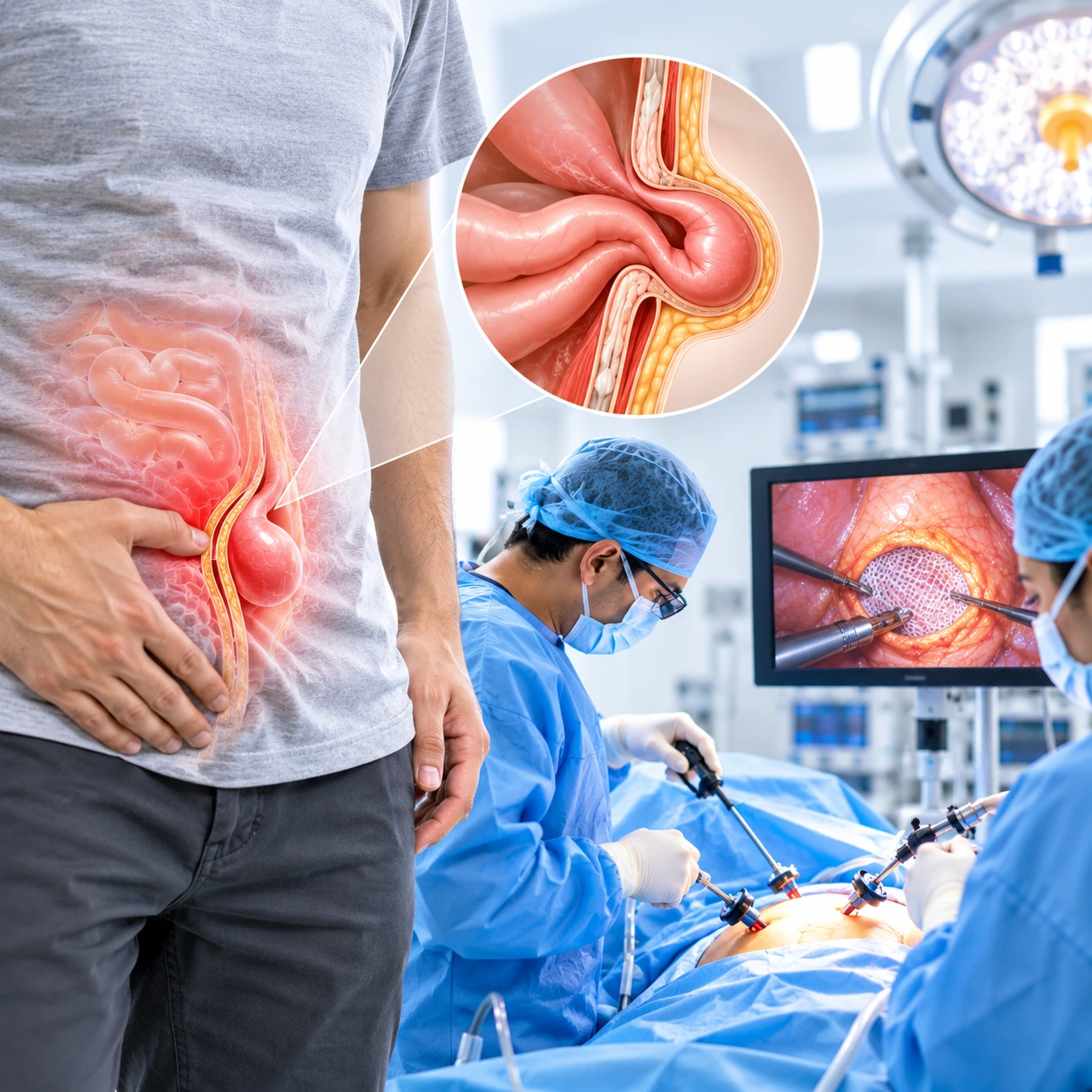
What Is Hernia Surgery?
Hernia surgery repairs a weakness in the abdominal wall through which tissue or part of an organ pushes outward. Depending on the type, size, symptoms, and your general health, a surgeon may recommend open repair or minimally invasive laparoscopic repair. In some cases, surgical mesh is used to reinforce the weakened area.
Common hernias include inguinal (groin), umbilical (near the navel), incisional (at a previous surgical incision), and epigastric hernias. A surgeon will explain the most appropriate approach after examining you.
If you are searching for a hernia specialist in Pune, arrange a medical consultation for an individualized assessment and treatment plan.
How Is Hernia Surgery Performed?
1. Medical Consultation
2. Pre-Surgical Preparation
3. Hernia Repair Surgery
4. Hernia Repair and Closure
5. Recovery and Follow-Up
Why Choose Brahm Chaitanya Hospital for Hernia Surgery in Pune?
Choosing a hospital for hernia treatment involves discussing your symptoms, the type of hernia, available surgical approaches, expected recovery, and follow-up care with a qualified surgical team.
Comprehensive Healthcare Services
Comprehensive Patient Evaluation
Experienced Medical Care
Diagnostic Evaluation
Patient-Centred Approach
When Is Hernia Surgery Recommended?
A surgeon may recommend hernia surgery when a hernia causes pain, discomfort, enlarges, interferes with daily activities, or carries a risk of complications. The decision depends on the hernia type and individual circumstances.
Common Signs and Reasons for Hernia Surgery
- A visible bulge in the abdomen or groin
- Pain or discomfort when lifting or straining
- Bulge that becomes more noticeable when coughing
- Heaviness or pressure around the bulge
- Discomfort during everyday activities
- A hernia that is growing or becoming painful
- A hernia at a previous surgical incision
- A bulge near the navel or groin
- Difficulty with usual activities because of symptoms
- A hernia that needs evaluation by a surgeon
- Urgent symptoms such as sudden severe pain or vomiting
A medical assessment can help determine whether a hernia can be monitored or whether surgical repair is recommended.
Types of Hernia That May Need Repair
Hernia surgery is intended to repair a weakness in the abdominal wall. A surgeon will examine the area and discuss which repair approach, if any, is suitable.
- Inguinal hernia (groin)
- Umbilical hernia (near the navel)
- Incisional hernia (at a previous surgical incision)
- Epigastric hernia (upper abdomen)
- Femoral hernia (upper thigh/groin area)
- Recurrent hernia after a previous repair
- Other abdominal wall hernias assessed by a surgeon
- Certain structural abnormalities
Finding a condition early can help doctors determine an appropriate treatment or monitoring plan.
Types of Hernia Surgery
Hernia repair may be performed using open surgery or minimally invasive laparoscopic techniques. The choice depends on the hernia’s location and size, previous surgery, overall health, and the surgeon’s assessment.
Your surgeon can explain the expected benefits, limitations, risks, and recovery needs of each suitable approach.
Is Hernia Surgery Painful?
Some pain or soreness is expected after hernia repair, and the level of discomfort varies by procedure and individual. Your care team will explain pain-control options and how to move safely during recovery.
Seek urgent medical attention for severe or worsening pain, vomiting, fever, or a painful bulge that cannot be pushed back, especially if accompanied by abdominal swelling.
How Long Does Hernia Surgery Take?
The length of hernia surgery depends on the hernia type, its complexity, and the technique used. Your surgeon can provide an estimate after evaluation. The overall hospital visit may take longer for preparation and post-operative monitoring.
What Is Recovery Like After Hernia Surgery?
After surgery, the team will provide wound-care guidance, medication instructions, activity restrictions, and a follow-up plan. Many patients are encouraged to walk gently soon after surgery, but strenuous activity and heavy lifting should be avoided until the surgeon says it is safe.
What Is Recovery Like After Hernia Surgery?
Seek medical advice if you notice a new or enlarging bulge, persistent pain, redness or drainage at the incision, fever, or symptoms that concern you after surgery.
- Sudden or worsening abdominal or groin pain
- Persistent constipation or diarrhea
- Unexplained weight loss
- Unexplained anemia
- A bulge that becomes painful or tender
- A bulge that cannot be pushed back in
- Redness or discoloration around a hernia bulge
- Vomiting, abdominal swelling, or inability to pass stool or gas
Your surgeon can advise whether your symptoms need urgent assessment and whether a hernia repair or another treatment is appropriate.
Why Early Evaluation Matters
A hernia may cause a visible bulge, discomfort, heaviness, or pain that increases with coughing, lifting, or straining. Some hernias need planned repair, while a trapped or strangulated hernia can be an emergency.
Seek emergency care for sudden severe pain, vomiting, a tender bulge that cannot be pushed back, or skin discoloration over the bulge.
How Should You Prepare for Hernia Surgery?
Your surgical team will give you instructions based on your health and the planned procedure. Preparation may include:
Do not stop prescription medicines on your own. Discuss all medications, supplements, allergies, and medical conditions with your surgeon before surgery.
Brahm Chaitanya
Super Speciality Hospital
NABH ACCREDITED
CASHLESS INSURANCE
Hernia Surgery in Pune – Brahm Chaitanya Hospital
If you are looking for hernia surgery in Pune, Brahm Chaitanya Hospital can be a starting point for arranging a consultation and discussing evaluation and treatment options.
The right approach depends on the type of hernia, symptoms, medical history, and surgeon’s assessment. Contact the hospital to confirm available services, appointment details, and the appropriate specialist before planning treatment.

Questions you may have about hernia surgery