




Advanced Knee Replacement Treatment in Pune
If you are experiencing persistent knee pain, stiffness, swelling, or difficulty walking and performing daily activities, knee replacement surgery in Pune may help improve mobility and quality of life when other treatments are no longer effective. Brahm Chaitanya Hospital provides medical evaluation and healthcare services for patients experiencing knee joint problems.
Call Us when you Need Help!
- ❤️ [XX]+ Cardiac Procedures
- 👨⚕️ Experienced Interventional Cardiologists
- 🚑 24x7 Emergency Cardiac Care
- 🏥 Cashless Insurance Support
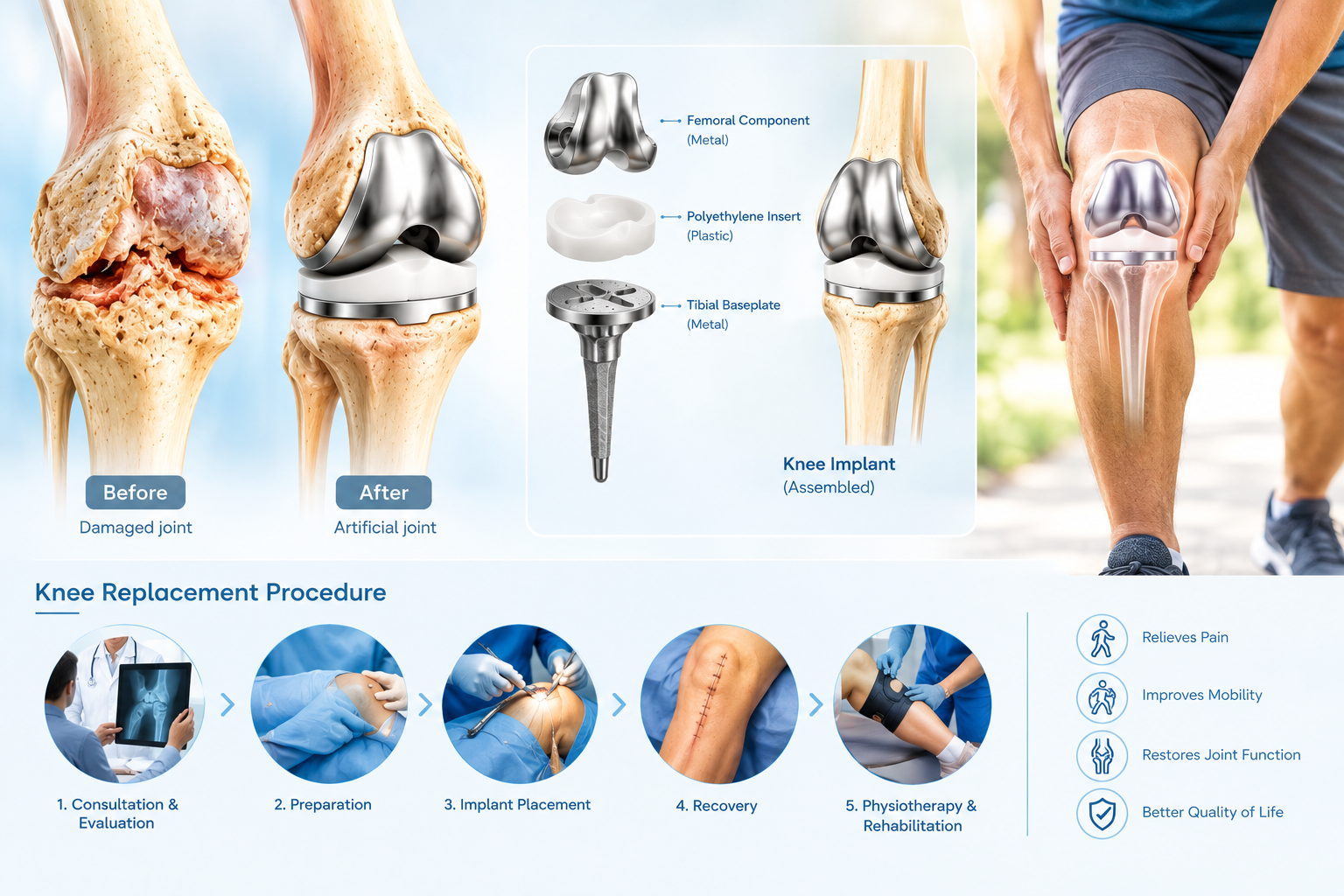
What Is Knee Replacement Surgery?
Knee replacement surgery, also known as knee arthroplasty, is a surgical procedure in which damaged surfaces of the knee joint are replaced with artificial components called implants. It is commonly recommended for patients experiencing severe knee pain, stiffness, and restricted movement due to arthritis or advanced joint damage.
The procedure may involve replacing the damaged surfaces of the thigh bone, shin bone, and, when necessary, the kneecap. The type of knee replacement depends on the extent of joint damage, the patient’s medical condition, and the surgeon’s assessment.
If you are searching for knee replacement surgery in Pune, consulting a qualified orthopaedic specialist can help you understand your treatment options and determine whether surgery is appropriate for your condition.
How Is Knee Replacement Surgery Performed?
1. Medical Consultation
2. Pre-Surgical Evaluation
3. Knee Replacement Procedure
4. Post-Operative Monitoring
5. Physiotherapy and Rehabilitation
Why Choose Brahm Chaitanya Hospital for Knee Replacement in Pune?
Choosing a hospital for knee replacement surgery involves considering orthopaedic expertise, surgical facilities, patient support, and rehabilitation requirements.
Comprehensive Healthcare Services
Brahm Chaitanya Hospital focuses on providing comprehensive healthcare services with an emphasis on patient care, clinical evaluation, and treatment planning.
Orthopaedic Evaluation
A detailed assessment helps identify the cause of knee pain, evaluate joint damage, and determine whether non-surgical treatment or knee replacement may be appropriate.
Individualised Treatment Planning
Treatment is planned according to the patient’s knee condition, medical history, mobility requirements, and overall health.
Surgical and Recovery Support
Patients undergoing knee replacement require appropriate pre-operative assessment, post-operative monitoring, and rehabilitation guidance to support their recovery.
Patient-Centred Approach
Clear communication, guidance about the procedure, and appropriate follow-up care help patients understand their treatment journey and recovery expectations.
When Is Knee Replacement Surgery Recommended?
Knee replacement surgery may be recommended when severe knee joint damage causes persistent pain and restricted movement despite appropriate non-surgical treatment.
Common reasons include:
- Severe osteoarthritis of the knee
- Rheumatoid arthritis affecting the knee joint
- Advanced cartilage damage
- Knee joint degeneration associated with ageing
- Joint damage following certain injuries
- Persistent knee pain despite medication or physiotherapy
- Difficulty walking, standing, or climbing stairs
- Knee stiffness and reduced joint movement
- Pain that interferes with sleep or daily activities
- Significant joint damage that affects quality of life
A qualified orthopaedic specialist can determine whether knee replacement is suitable based on your symptoms, physical examination, imaging results, and overall health.
What Conditions Can Knee Replacement Surgery Help Treat?
Knee replacement surgery may help manage symptoms associated with several conditions affecting the knee joint, including:
- Osteoarthritis
- Rheumatoid arthritis
- Advanced degenerative joint disease
- Severe cartilage damage
- Certain cases of post-traumatic arthritis
- Knee joint deformities associated with advanced arthritis
- Significant knee joint damage that has not responded adequately to conservative treatment
The primary goals of knee replacement are to reduce pain, improve joint function, and support better mobility. Outcomes vary depending on the patient’s condition, overall health, and rehabilitation progress.
What Types of Knee Replacement Surgery Are Available?
The type of knee replacement depends on the extent of joint damage and the patient's individual requirements.
Total Knee Replacement
Total knee replacement involves replacing the damaged surfaces of the knee joint with artificial components. It is commonly considered for patients with advanced arthritis affecting multiple parts of the knee.
The procedure aims to reduce pain, improve knee function, and help patients perform daily activities more comfortably.
Partial Knee Replacement
Partial knee replacement involves replacing only the damaged portion of the knee joint while preserving the healthy parts. It may be suitable for selected patients whose joint damage is limited to one compartment of the knee.
Your orthopaedic specialist can determine which procedure may be appropriate after evaluating your condition.
The appropriate procedure depends on the joint affected, the extent of damage, and the recommendations of your orthopaedic specialist.
Is Knee Replacement Surgery Painful?
Knee replacement surgery is performed using anaesthesia to prevent pain during the operation. Some discomfort, swelling, and soreness may occur after surgery as the body begins to heal.
Your healthcare team will develop a pain management plan based on your medical condition and recovery needs. Physiotherapy and following your surgeon’s instructions can help support your recovery.
What Happens After Knee Replacement Surgery?
Following surgery, the medical team monitors your recovery and provides instructions regarding medication, wound care, movement, and rehabilitation.
Depending on your condition and the surgeon’s recommendations, assisted standing and walking may begin with a physiotherapist soon after surgery.
Recovery generally involves:
- Pain management and post-operative monitoring
- Wound care and follow-up appointments
- Guided physiotherapy and strengthening exercises
- Gradual improvement in knee movement
- Progressive return to daily activities
- Following precautions recommended by your surgeon
Many patients resume basic daily activities over several weeks, while further improvement in strength and mobility may continue for several months. Recovery varies from person to person.
Seek prompt medical attention if you experience fever, increasing wound redness, sudden severe pain, chest pain, breathlessness, or other concerning symptoms.
How Long Does Knee Replacement Surgery Take?
Knee replacement surgery commonly takes around one to two hours, although the duration may vary depending on the complexity of the procedure, the type of replacement, and the patient’s individual condition.
Additional time is required for pre-operative preparation, anaesthesia, post-operative monitoring, and initial recovery.
Your surgeon can provide a more personalised estimate after evaluating your condition.
When Should You Consult an Orthopaedic Specialist?
You should consider medical evaluation if you experience persistent or worsening knee symptoms, particularly:
- Ongoing knee pain
- Pain while walking or standing
- Stiffness after sitting or resting
- Difficulty climbing stairs
- Swelling around the knee
- Reduced knee movement
- Pain that disrupts sleep
- Difficulty getting up from a chair
- Difficulty performing everyday activities
- Persistent symptoms despite medication or physiotherapy
An orthopaedic specialist can evaluate the cause of your symptoms and recommend appropriate treatment options.
Why Early Evaluation Matters
Persistent knee pain can result from arthritis, cartilage damage, injuries, or other medical conditions. Early evaluation helps identify the underlying cause and allows appropriate treatment options to be considered.
Depending on the diagnosis, treatment may include medication, physiotherapy, activity modification, weight management where appropriate, walking aids, or surgery.
When knee joint damage is advanced and non-surgical treatment does not provide sufficient relief, knee replacement may be considered as part of an individualised treatment plan.
What Should You Do Before Knee Replacement Surgery?
Your doctor will provide specific pre-operative instructions based on your health and treatment plan. Preparation may include:
Do not stop prescription medicines without medical advice. Discuss all medications and supplements with your healthcare team before surgery.
Brahm Chaitanya
Super Speciality Hospital
NABH ACCREDITED
CASHLESS INSURANCE
Knee Replacement in Pune – Brahm Chaitanya Hospital
If you are looking for knee replacement treatment in Pune, Brahm Chaitanya Hospital provides a setting for medical consultation, evaluation, and coordinated patient care.
Whether you are experiencing persistent knee pain, advanced arthritis, joint stiffness, or difficulty walking, consulting an orthopaedic specialist can help you understand the most appropriate next steps.
Book a consultation to discuss your symptoms, review your treatment options, and learn whether knee replacement surgery may be suitable for your condition.

Questions you may have about the colonoscopy